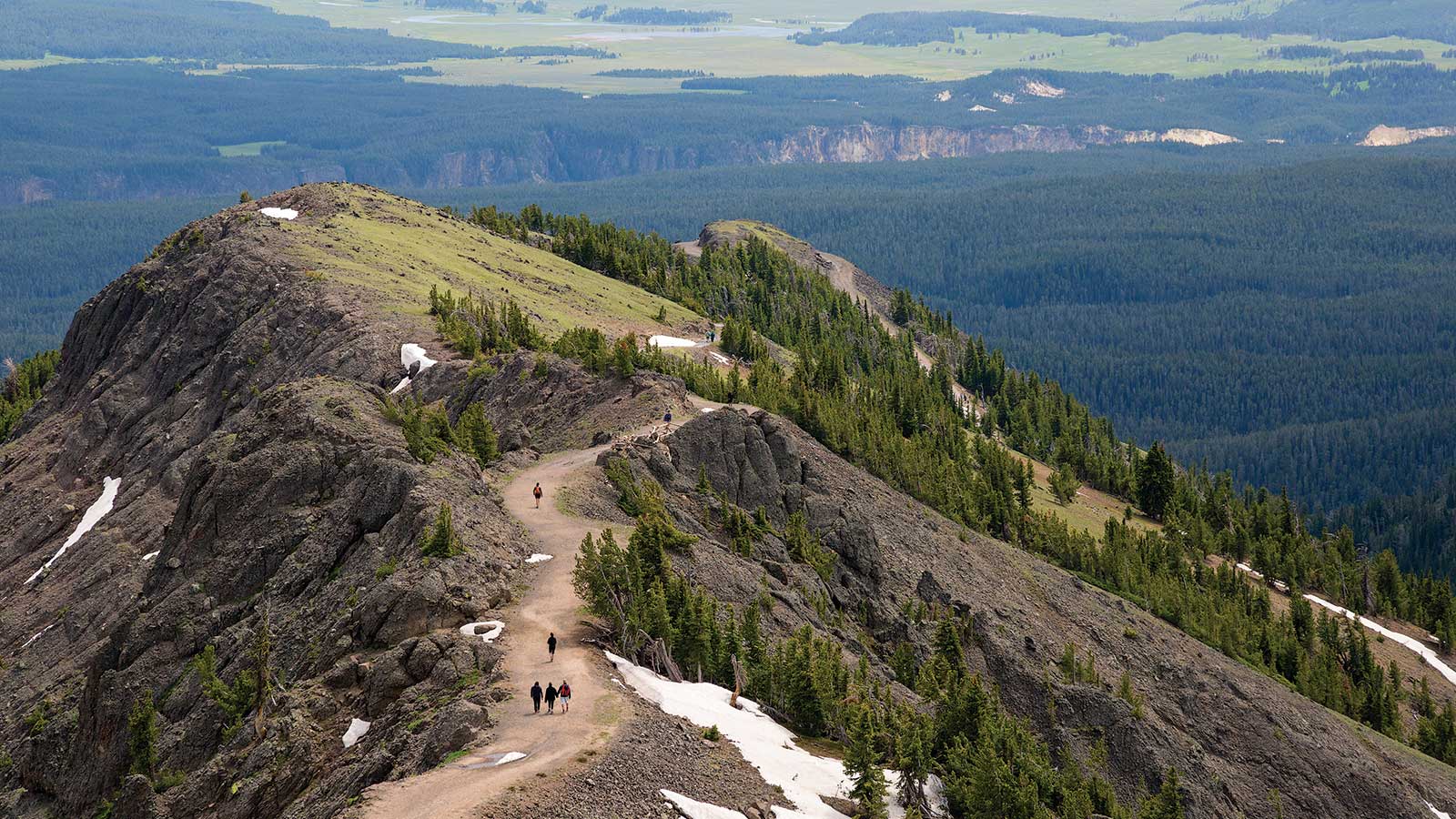
Nestled in the heart of Yellowstone National Park, Mount Washburn stands as an iconic beacon for hikers and nature enthusiasts alike. Reaching an elevation of 10,243 feet (3,122 meters), this majestic peak offers some of the most breathtaking and expansive panoramic views available in the entire park, encompassing the vast Yellowstone Caldera and distant mountain ranges. While its summit rewards all who ascend with unforgettable vistas, choosing the right path to get there is key to tailoring your hiking experience. Mount Washburn is accessible via two distinct trails: the scenic Dunraven Pass Trail and the more direct Chittenden Road Trail.
Mount Washburn: A Yellowstone Icon with a Rich History
More than just a challenging hike, Mount Washburn represents a significant piece of Yellowstone's geological and historical tapestry. Located in the north-central area of the park, it's named in honor of General Henry Washburn, who led the pivotal Washburn-Langford-Doane Expedition in 1870. This expedition's explorations were instrumental in establishing Yellowstone as the world's first national park, forever preserving its natural wonders for generations to come.
Today, Mount Washburn is not only a popular hiking destination but also home to one of Yellowstone's three remaining fire lookout stations. The current tower, a sturdy structure built in 1941, remains actively operational, vigilantly scanning the horizon for wildfires. For visitors, it serves a dual purpose: a critical component of park management and an invaluable interpretive center, offering insights into the park's geology, wildlife, and the history of fire ecology.
Dunraven Pass vs. Chittenden Road: Choosing Your Path to the Peak
While both trails lead to the same awe-inspiring summit, the journey itself is remarkably different, catering to varying preferences and fitness levels. Understanding these distinctions is crucial for planning your perfect Mount Washburn hike.
The Dunraven Pass Trail: A Gradual Ascent Through Wildflower Fields
For those who prioritize a more meandering and visually rich experience, the Dunraven Pass Trail is often the preferred choice. Starting at the Dunraven Pass trailhead, this path unfurls for approximately 6 miles round trip, involving an elevation gain of about 1,400 feet. While slightly longer, its beauty lies in its more gradual ascent. The trail gently switchbacks up the mountainside, making it feel less strenuous and allowing hikers to truly soak in their surroundings.
- Length: Approximately 6 miles round trip
- Elevation Gain: Around 1,400 feet
- Key Features:
- Gradual Slope: Offers a more sustained, less abrupt climb, making it popular for hikers of all experience levels.
- Wildflower Displays: In early summer (typically late July to early August), this trail transforms into a vibrant tapestry of alpine wildflowers, providing incredible photo opportunities.
- Sweeping Views: Even on the ascent, hikers are treated to wide, unobstructed views that grow more expansive with every step.
The Dunraven Pass Trail is ideal for photographers, birdwatchers, or anyone who enjoys a longer immersion in the subalpine environment before reaching the exposed summit. It offers a more traditional, wilderness-like hiking feel.
The Chittenden Road Trail: The Quicker, Accessible Route
If speed, directness, or accessibility are higher on your priority list, the Chittenden Road Trail is an excellent option. This trail begins at the parking area at the end of Chittenden Road (note: the road itself is often closed to private vehicles, becoming part of the trail or requiring a short walk to the trailhead). At approximately 5 miles round trip with the same 1,400 feet of elevation gain, it's shorter and notably steeper than its counterpart.
- Length: Approximately 5 miles round trip
- Elevation Gain: Around 1,400 feet
- Key Features:
- Shorter & Steeper: Provides a more direct, albeit more strenuous, route to the summit, often preferred by those with limited time or seeking a quicker workout.
- All-Terrain Wheelchair Accessible: A significant advantage of this trail is its width and grade, making it accessible for all-terrain wheelchairs, ensuring a more inclusive experience for visitors with mobility limitations.
- Former Fire Road: The path follows an old fire road, making it wider and generally less technical underfoot than a typical hiking trail.
The Chittenden Road Trail is particularly well-suited for families with younger, energetic hikers, or individuals who appreciate a clearly defined, robust path. Its accessibility feature truly sets it apart, opening up the summit experience to a broader range of visitors.
Summit Wonders: Panoramic Vistas, Wildlife & Education
Regardless of which trail you choose, the rewards awaiting you at the top of Mount Washburn are universally spectacular. From the summit, visitors are treated to an unparalleled Yellowstone's Mount Washburn: Panoramic Views & Historic Fire Lookout, stretching 360 degrees across the landscape. On clear days, your gaze can extend as far south as the distant Teton Range, encompassing vast expanses of the Yellowstone Caldera, the Absaroka Mountains, and the Grand Canyon of the Yellowstone.
Wildlife Encounters at Altitude
Mount Washburn is not just about the views; it's a prime location for wildlife observation. Keep a keen eye out, especially in the higher elevations near the summit, for herds of bighorn sheep gracefully navigating the rocky terrain. Mule deer are also commonly sighted, along with various bird species, including the charismatic Clark's nutcracker and various raptors soaring on the thermals. While rarer, bears are also present in the area, so always be "bear aware" and carry bear spray.
The Interpretive Fire Lookout
The historic fire lookout tower itself is a destination. Beyond its operational duties, it functions as an interpretive center. Park staff are often present, eager to share insights into the park's geology, wildlife, and the crucial role of fire in the Yellowstone ecosystem. Informative displays inside the lookout provide a comfortable respite from the wind and further enrich your understanding of this unique environment.
Essential Preparation for Your Mount Washburn Adventure
Hiking Mount Washburn is a memorable experience, but it requires proper preparation to ensure safety and enjoyment. The high-altitude environment means weather can be unpredictable and change rapidly.
- Layered Clothing: Even in summer, temperatures at the summit can be significantly colder and windier than at the trailhead. Pack layers, including a windproof/waterproof outer shell. Snow can linger on the trails well into July.
- Hydration and Snacks: Carry plenty of water (at least 2-3 liters per person) and high-energy snacks. Dehydration can be exacerbated at high altitudes.
- Sturdy Footwear: Wear comfortable, broken-in hiking boots with good ankle support.
- Sun Protection: The sun's intensity is stronger at higher elevations. Apply sunscreen liberally, wear a wide-brimmed hat, and sunglasses.
- Bear Spray: Carry bear spray and know how to use it. Make noise while hiking, especially through dense vegetation, to avoid surprising wildlife.
- Check Conditions: Always check current trail conditions, weather forecasts, and any potential closures with the National Park Service before heading out. The trails are typically open from late May/early June through early October, depending on snowpack.
- Start Early: To avoid afternoon thunderstorms, crowded trails, and to secure parking, it's always best to start your hike early in the morning.
- Leave No Trace: Pack out everything you pack in, stay on marked trails, and respect wildlife by keeping a safe distance.
Conclusion
Mount Washburn offers one of the most rewarding hiking experiences in Yellowstone National Park, presenting a unique blend of physical challenge, natural beauty, and historical significance. Whether you opt for the wildflower-lined, gradual ascent of the Dunraven Pass Trail or the direct, accessible journey via the Chittenden Road Trail, the unparalleled 360-degree views from the summit are a fitting reward. As you plan your visit to Mount Washburn, Yellowstone National Park, consider which trail best suits your style, prepare diligently, and get ready to create lasting memories atop one of America's most cherished peaks.
